

What’s the purpose of mobile medical care? We certainly can’t solve all health problems or replace state medicine, but we can set ourselves the goal of helping people with chronic diseases stabilize their condition, increase awareness of screening programs, and detecting as many of the most common serious diseases as possible.
To do this, the patient needs two things: the desire to be examined, which our awareness helps increase, and the ability to be examined, which our mobile teams provide.
There’s still one disease whose timely detection has not yet become a part of our wellness culture: prostate cancer. Prostate cancer is the most common malignant tumor among men. Prostate cancer screening is all too often neglected until too late, and screening approaches aren’t clearly spelled out in our national clinical protocol. International guidelines recommend men over 45 be tested for prostate-specific antigen (PSA) content through a blood test, and with a prostate ultrasound. Even in peacetime, men’s well-known stubbornness when it comes to visiting doctors, combined with insufficient outreach, meant this was neglected.
Now, three years into a war and with rural frontlines and degraded infrastructure, the problem can seem even more insurmountable.
But our mobile teams have everything needed to detect this disease. The tests don’t require the presence of symptoms, and the screenings are only as uncomfortable as a needle poke and some cool ultrasound gel. Of course, if there are complaints of symptoms, we can examine anybody, even under 45. Risk goes up with age, but being young doesn’t mean being immune.
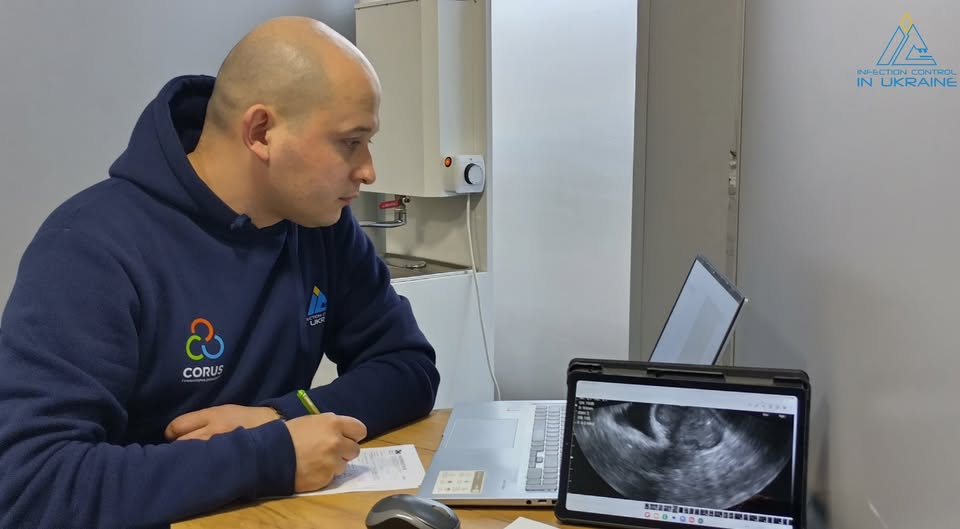
A urologist isn’t required; general practitioners are able to do the screening. Even gynecologists, already experienced with ultrasounds and blood screening, can take their existing skills and help men. That’s how Anton Bielinskyi, one of our gynecologists, has stepped outside his usual women patients to detect cases of prostate cancer in men and likely saved their lives through referrals through further examination.